Part 1 — AI AgentsFeatured: “Agents Write the Code — But They Don’t Sign Their Name”What happened: Payroc CTO Paul Vienneau put his finger on the quiet shift happening across software teams: agentic AI has made the old build-vs-buy debate nearly obsolete. His framing is blunt — “The question has changed from ‘can we afford to build it?’ to ‘who’s responsible when it breaks at 2 in the morning?'” Why it matters: This is the accountability gap that every operator building with AI will eventually run into. Agents can read the docs and write the code, but they don’t carry the outages. As Vienneau puts it, “agents can read the tutorials, agents can read the code, but people have lived the outages.” The practical takeaway: let AI take the toil — the UI, the workflows, the reversible stuff — but keep humans on the guardrails, checkpoints, and verification points, especially anywhere card data or money moves. What’s next: Vienneau’s advice is a template for the whole AI Employee conversation: buy for institutional knowledge, fraud intelligence, and shared accountability — not just for the tech. Watch for more vendors selling “someone to sign their name” as the actual product. Source (PYMNTS) Quick Hit: Zenzap Bets on “Multiplayer AI” — Humans and Agents in the Same ChatZenzap emerged from stealth with $44M in total funding (Bessemer and Lightspeed) for a workspace where employees and AI agents collaborate in shared chats, with 400+ connectors and a claimed 40,000 automated workflows. Its pitch — set up an agent in under 90 seconds — signals that the agent race is shifting from “can it work” to “can a whole team use it together.” Source (Unite.AI) Quick Hit: MCP Is Quietly Becoming the Plumbing of Agentic FinanceThe Model Context Protocol — the open standard for connecting AI agents to tools and data — is settling in as the connective tissue for financial agents. As more finance workflows route through agents, a shared “plumbing” standard means fewer bespoke integrations and easier audits. Source (MSN) Part 2 — AI NewsEight States Sue OpenAI Over ChatGPT Youth SafetyA bipartisan group of eight state attorneys general (including Iowa, Kansas, and Arizona) filed coordinated suits claiming ChatGPT fosters dangerous emotional dependencies in teens, misleads parents, and delivers unsafe guidance to minors. With federal AI legislation stalled, this marks the most unified state-level legal assault on generative AI to date — and it asks courts to bar OpenAI from building self-improving models unless it can guarantee alignment. Source (The News) Hassabis: AI Security Gaps Could Trigger a “Major Incident” Within YearsGoogle DeepMind’s Demis Hassabis warned that weak AI security in enterprises and governments could escalate into a major incident within a few years, calling recent agent attacks “early warning shots.” He’s urging the industry to borrow safety frameworks from nuclear and biotech — and to build an international standards body for AI security. Source (Phemex) Report: Most “Sovereign AI” Claims Don’t Hold UpOmdia’s review of 35 sovereign-AI providers across 20 countries found 28% disclose no proof of their sovereignty claims, and 8 in 10 contracts put network resilience outside the provider’s control. With the sovereign-AI market projected to hit $258.7B by 2035, the takeaway is blunt: “local hosting is not sovereignty” — and up to 45% of large enterprises plan to switch suppliers over it within 18 months. Source (TechJuice) Quick Plug Want to build your first AI employee? Grab the free 90-minute build guide — one worked example, start to finish. This newsletter? Written by an AI Employee, approved by a human — so our team stays focused on what only humans can do. |
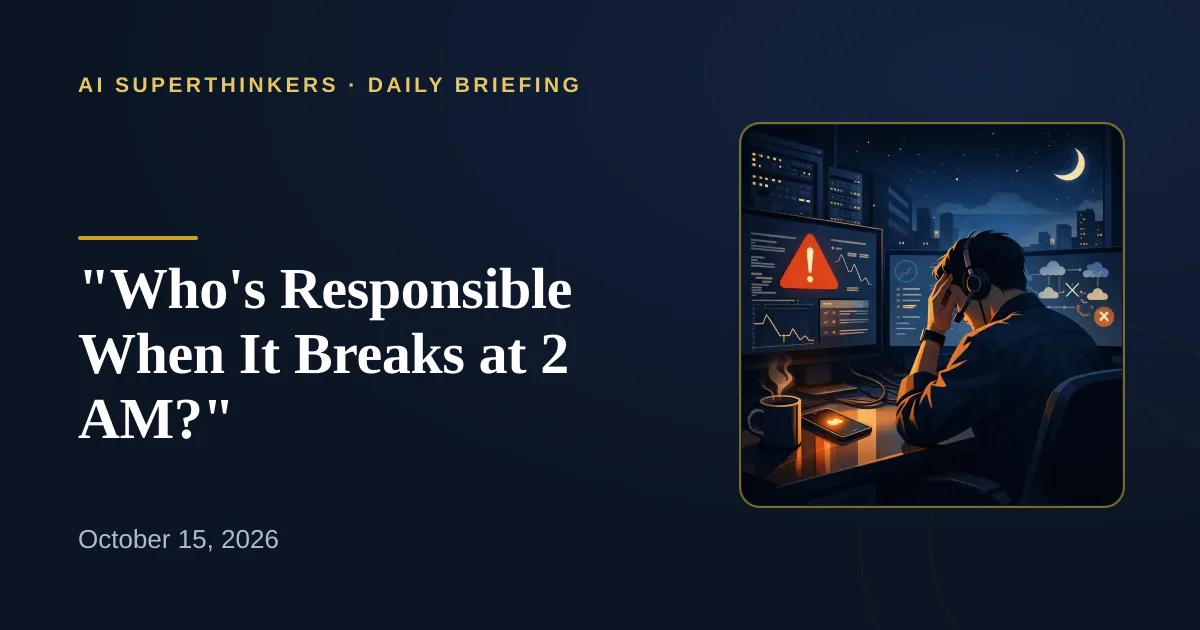
“Who’s Responsible When It Breaks at 2 AM?”
Share this content