AI Agents for Research and Analysis: Decisions at Speed
By Anthony Kayode Odole | Former IBM Senior Managing Consultant, Founder of AIToken Labs
Sixty-seven percent of small and mid-size businesses say they do not have enough data to make informed decisions (Salesforce). Not because the data does not exist — but because nobody is gathering, analyzing, and presenting it in a way that drives action.
You have felt this. Pricing decisions based on gut feel. Market opportunities spotted three months too late. Competitors launching features you did not see coming. The information was out there. You just did not have the time, tools, or team to find it.
Businesses using AI for analysis are 5x more likely to make faster decisions than their competitors (McKinsey). And traditional market research? That runs $15,000 to $50,000 per project with a consulting firm — a budget most small businesses cannot justify for a one-time report that is outdated by the time it lands on your desk.
There is a better way. You can hire AI employees that research your market, track your competitors, analyze your customers, and forecast your finances — continuously, not as one-off projects. Think of each agent as a specialized analyst on your team: market researcher, competitive intelligence officer, customer insight specialist, financial analyst. If this concept is new to you, our guide on what AI agents are covers the fundamentals.
Here are 7 research and analysis roles you can fill with AI employees, what they cost, and a 90-day plan to go from gut-feel decisions to data-driven operations.
Why Spreadsheets and Google Searches Aren't Research
Let's be honest about what "research" looks like at most small businesses. You Google something when a question comes up. You read a few industry articles when they show up in your feed. You check a competitor's website when a customer mentions them. Maybe you export some data to a spreadsheet once a quarter.
That is not research. That is skimming. It is reactive, inconsistent, and full of blind spots.
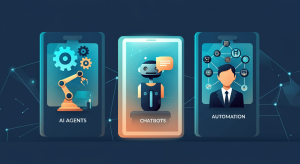
AI research agents work differently. They continuously monitor sources, synthesize information across datasets, identify patterns humans miss, and deliver structured insights — not raw data dumps. The distinction matters: these are not simple chatbots that answer when asked. They are autonomous agents that observe, analyze, and report on an ongoing basis. For the technical explanation of how this works, read our guide on how AI agents work. And for a clear comparison between agents and the chatbots you may have already tried, see our breakdown of AI agents versus chatbots.
Here is a concrete example. You manually checking a competitor's pricing page once a quarter versus an AI agent monitoring 10 competitors' pricing, features, content, job postings, and customer reviews daily — then alerting you only when something meaningful changes. Same task. Completely different outcome.
You cannot hire a market research analyst at $60,000 to $85,000 per year. But you can hire an AI agent that does 80% of the work for $100 to $300 per month. That is the math that changes everything for SMBs.
7 Research and Analysis Roles You Can Fill With AI Employees
Think of each AI agent as a specialized analyst you are hiring for a specific research function. Together, they give you the business intelligence capability of a company 10x your size. These are not hypothetical — each role can be filled today at SMB-friendly price points. Here are 7 AI analysts ready to join your team.
1. Market Research Agent
Your Market Research Agent tracks industry trends, estimates market sizing, identifies emerging opportunities, and monitors regulatory changes that affect your sector. It replaces expensive one-time market research reports with continuous, always-on market intelligence.
This falls into one of the most practical types of AI agents for business — delivering value from day one because every strategic decision depends on market context.
- Time saved: 5-8 hours/week
- ROI: Identify 2-3x more market opportunities per quarter, 60% faster trend identification
- Cost: $75-$300/month (tools like Perplexity Pro, Kompyte, custom AI workflows with web search)
- Best for: Any business entering new markets or launching new products
2. Competitor Intelligence Agent
Your Competitor Intelligence Agent tracks competitors' pricing changes, new features, content strategy, job postings (signals of expansion), advertising spend, and customer reviews. Stop being the last to know about price changes or new offerings. Know what your competitors are doing before your customers tell you.
- Time saved: 4-6 hours/week
- ROI: 30-50% faster competitive response time, fewer lost deals to moves you did not see coming
- Cost: $100-$400/month (tools like Crayon, Klue, or custom monitoring with AI analysis)
- Best for: Businesses in competitive markets with 5+ direct competitors
3. Customer Insight Agent
Your Customer Insight Agent analyzes customer reviews, survey responses, support tickets, social media mentions, and NPS data to surface patterns, pain points, and feature requests. Finally understand what your customers actually think — not what you assume they think — without hiring a research firm.
- Time saved: 4-6 hours/week
- ROI: 25-40% improvement in customer satisfaction scores, product development aligned with actual customer needs
- Cost: $75-$250/month (tools like MonkeyLearn, Brandwatch, or custom sentiment analysis workflows)
- Best for: Businesses with 100+ customer interactions per month (reviews, tickets, surveys)
4. Financial Analysis Agent
Your Financial Analysis Agent handles cash flow forecasting, scenario modeling ("what if revenue drops 20%?"), budget variance analysis, spend optimization, and financial trend identification. Get financial visibility beyond your accountant's quarterly report — know your runway, cash position, and financial risks in real time.
For a full breakdown of how AI agents transform financial operations, read our guide on AI agents for finance and accounting.
- Time saved: 3-5 hours/week
- ROI: 40% more accurate cash flow forecasts, 15-25% reduction in unnecessary spending through anomaly detection
- Cost: $100-$300/month (tools like Jirav, Datarails, or custom spreadsheet-connected AI workflows)
- Best for: Businesses with $500K+ annual revenue managing cash flow across multiple revenue streams
5. Trend Monitoring Agent
Your Trend Monitoring Agent continuously scans industry news, social media, patent filings, regulatory announcements, and academic research to surface trends relevant to your business. Be the first in your market to spot opportunities and threats — instead of reading about them in a trade magazine six months later.
- Time saved: 3-5 hours/week
- ROI: 2-3 month head start on emerging trends versus relying on manual monitoring
- Cost: $50-$200/month (tools like Feedly AI, Google Alerts + AI summarization, custom news monitoring agents)
- Best for: Businesses in fast-moving industries (tech, e-commerce, health, finance)
6. Report Generation Agent
Your Report Generation Agent auto-creates weekly business reports, monthly dashboards, board meeting summaries, investor updates, and client-facing analysis documents. Stop spending Sunday nights building reports. Get polished, data-driven documents generated automatically from your existing data sources.
- Time saved: 5-8 hours/week
- ROI: 70% reduction in reporting time, consistent reporting cadence (no more skipping months)
- Cost: $50-$200/month (tools like Narrative Science, Automated Insights, or custom report templates with AI)
- Best for: Any business that produces regular reports for stakeholders, clients, or internal teams
7. Patent and IP Research Agent
Your Patent and IP Research Agent searches prior art, monitors competitor patent filings, analyzes IP landscapes for your industry, and flags potential infringement risks. Protect your innovations and understand the IP landscape without paying a patent attorney $400 per hour for preliminary research.
- Time saved: 10-20 hours per project (episodic, not weekly)
- ROI: 60-80% reduction in preliminary IP research costs, earlier identification of freedom-to-operate risks
- Cost: $100-$400/month (tools like PatSnap, Google Patents + AI analysis, Lens.org + custom workflows)
- Best for: Product companies, tech startups, manufacturers with proprietary processes or designs
The Real Cost of an AI Research Team
IBM Research finds that AI agents improve worker performance by nearly 40%. But what does the actual investment look like compared to the alternatives?
Solopreneur / Micro Business (1-5 employees):
- Hire: 1-2 AI analysts (market research + competitor intelligence)
- Monthly cost: $150-$500/month
- Value replaced: Weekly market awareness without manual research time
- Alternative: Market research consultant ($2,000-$5,000/project, done once or twice a year)
- ROI: 400-800%
Small Business (6-20 employees):
- Hire: 3-4 AI analysts (market research + competitor intelligence + customer insights + report generation)
- Monthly cost: $300-$1,000/month
- Value replaced: Continuous business intelligence across market, competitors, and customers
- Alternative: Market research analyst ($5,000-$7,000/month salary) or consulting firm retainer ($5,000-$15,000/month)
- ROI: 500-1,500%
Growing Business (21-50 employees):
- Hire: 5-7 AI analysts (full research department)
- Monthly cost: $500-$1,500/month
- Value replaced: Enterprise-grade business intelligence capability
- Alternative: BI analyst + market researcher + financial analyst ($15,000-$25,000/month in combined salaries)
- ROI: 1,000-1,700%
A small business investing $300-$1,000 per month in AI research employees gains continuous business intelligence that would cost $5,000-$15,000 per month through traditional consulting firms or human analysts. For detailed ROI calculations you can apply to your own numbers, read our AI agent ROI guide for small business.
How to Hire Your First AI Research Analyst (The 90-Day Roadmap)
Phase 1: Pick Your Biggest Decision Gap (Week 1-2)
Ask yourself one question: Where do I make decisions based on gut feel because I do not have data?
Common answers include competitive pricing, market opportunity sizing, customer satisfaction, and cash flow projection. Start with ONE agent — the one that addresses your highest-stakes decision gap. For most businesses, that is competitor intelligence or customer insights. These deliver the fastest visible value because the information changes frequently and directly affects revenue decisions.
Do not overcomplicate this. Pick one gap. Hire one AI employee. For guidance on selecting the right agent for your specific situation, follow our guide on how to choose the right AI agent.
Phase 2: Connect Data Sources and Validate (Week 3-6)
Connect the agent to your data sources: CRM records, customer reviews, financial data, competitor URLs, industry news feeds. Then run it for two weeks alongside your manual process. Compare what the agent finds to your own research.
This parallel run is essential. You are calibrating the agent — adjusting sources, filters, and reporting frequency based on what is actually useful versus noise. Not every insight the agent surfaces will matter. Your job in this phase is to teach it what "useful" looks like for your business. For step-by-step implementation details, read our AI agent implementation guide.
Phase 3: Expand and Integrate Into Decisions (Month 2-3)
Once the first agent proves value, add a second — market research or financial analysis, depending on your next biggest gap. Build research outputs into your decision-making cadence: weekly competitor brief, monthly market report, quarterly financial forecast.
Connect the report generation agent to create stakeholder-ready documents automatically. When you reach three or more agents working together, you are building a multi-agent system for complex business processes — and the compounding value is significant. Track everything using the framework in our guide on measuring AI agent performance.
Common Research AI Mistakes to Avoid
Five pitfalls that trip up businesses adopting AI research agents:
-
Treating AI output as truth — AI research agents synthesize and summarize, but they can hallucinate statistics and misinterpret data. Always verify critical findings, especially financial data and market sizing, before making big decisions. Use agents for directional intelligence, not as your sole source of truth for high-stakes calls.
-
Drowning in data instead of insights — More data is not better. Configure your agents to deliver actionable insights (what to do), not raw data dumps (here are 500 articles). Set clear output formats for every agent: summary, recommendation, confidence level. If you cannot act on it, it is noise.
-
Ignoring data freshness — An AI agent analyzing two-year-old market data will give you two-year-old recommendations. Ensure your sources are current and set your agents to flag when data is stale or conflicting. Stale data is worse than no data because it creates false confidence.
-
Not defining the question first — "Research the market" is not a useful prompt. "What are the top 3 emerging segments in our industry with fewer than 10 competitors and $50M+ TAM?" is. Specific questions produce specific, actionable answers. Vague prompts produce vague, useless reports.
-
Skipping the human review loop — AI agents excel at gathering and synthesizing, but strategic interpretation requires human judgment. Use agents for the 80% (data gathering, pattern recognition) and humans for the 20% (strategic meaning, decision-making). The agent finds the signal. You decide what it means.
Research AI Agents by Business Type
| Business Type | Top 2 Agents to Start With | Highest-Value Output |
|---|---|---|
| SaaS / Tech Startup | Competitor Intelligence + Market Research | Weekly competitor feature/pricing tracker |
| E-commerce | Customer Insight + Trend Monitoring | Product demand forecasting from review analysis |
| Professional Services | Market Research + Report Generation | Automated client-facing market reports |
| Local Business | Customer Insight + Competitor Intelligence | Local competitor tracking + review sentiment analysis |
| Manufacturing | Patent & IP Research + Market Research | IP landscape analysis + supply market trends |
| Agency / Consultancy | Market Research + Financial Analysis | Client industry briefs + project profitability analysis |
FAQs
Can AI research agents replace a market research firm?
For ongoing monitoring and standard analysis, yes. AI agents handle 80% of what a research firm does — data gathering, synthesis, trend identification — at a fraction of the cost. For complex primary research requiring custom surveys or in-depth interviews, you still need human researchers. But most SMBs need the monitoring, not the bespoke study.
How accurate is AI-generated competitive intelligence?
Highly accurate for factual data — pricing, features, job postings, public filings. Less reliable for strategic interpretation. Use agents to gather and organize competitive data, then apply your own industry expertise to interpret what the moves mean. Accuracy improves as you calibrate the agent over time.
What data sources do AI research agents need to be effective?
At minimum: competitor websites, industry news feeds, and your own CRM or customer data. For deeper analysis: financial records, social media APIs, patent databases, and review platforms. Start with publicly available sources and add proprietary data as you scale.
Can AI agents analyze qualitative data like customer interviews?
Yes. Modern AI agents handle transcription, theme extraction, sentiment analysis, and pattern identification across interview and survey data. They are especially strong at finding patterns across hundreds of responses that humans would miss.
What is the minimum budget for an AI research agent?
$50-$75 per month for a basic trend monitoring or market research setup using tools like Feedly AI or Perplexity Pro. For competitor intelligence with dedicated tools like Crayon, expect $100-$200 per month.
How do I know if the AI agent's analysis is reliable?
Run a two-week parallel test: have the agent analyze something you already know the answer to. Compare its output to your own research. Check its sources and reasoning. If it consistently produces accurate, useful findings on known topics, trust it on unknown ones.
Can AI research agents work with my existing CRM and accounting software?
Most modern AI research tools integrate with common platforms — Salesforce, HubSpot, QuickBooks, Xero, Google Workspace. For less common systems, you may need middleware like Zapier or Make to connect data sources.
How long before an AI research agent delivers useful insights?
Expect basic useful outputs within the first week. Calibrated, high-quality insights within 2-4 weeks as you tune sources, filters, and reporting formats. By month two, the agent should be producing insights you actively rely on for decisions.
Next Steps
Identify your biggest decision gap — the area where gut feel currently replaces data. Choose one research agent that addresses it. Connect it to your data sources and run it for two weeks to validate quality. Then integrate its output into your regular decision cadence: weekly team meetings, monthly strategy reviews, quarterly planning.
Within 90 days, you can have continuous business intelligence running for a fraction of what a consulting firm or full-time analyst would cost. And 86% of executives expect AI agents to automate workflows by 2027 (Gartner) — early adopters gain the compounding advantage.
For the complete overview of building AI into your operations, read our guide to AI agents for small business. And to see how research automation connects to your broader business processes, explore our guide to AI business automation.
Related Department Guides:
- AI Agents for Sales
- AI Agents for Marketing
- AI Agents for HR
- AI Agents for Finance
- AI Agents for Customer Service
Want to go deeper? I teach business owners how to implement AI agents step-by-step at aitokenlabs.com/aiagentmastery
About the Author
Anthony Odole is a former IBM Senior Managing Consultant, where he served as Enterprise Architect on Fortune 500 engagements, and the founder of AIToken Labs. He helps business owners cut through AI hype by focusing on practical systems that solve real operational problems.
His flagship platform, EmployAIQ, is an AI Workforce platform that enables businesses to design, train, and deploy AI Employees — AI agents that function as digital workforce members — that perform real work without adding headcount.